Higher than 74% of images in the League. Master — Exceptional. Fewer than 1 in 10 reach this.
88.1510
✓ Apex DDI across 5 dimensions
✓ Expert review by Grandmaster mentor
✓ Final evaluation calibrated
Evaluated 14 Aug 2026 · Public
The five dimensions
Emotion
8.6↑
Your Strongest
Wonder Factor
8.4
Strong
Visual Impact
8.2
Strong
Difficulty
7.8
Strong
Timing
7.5↓
Your Next Leap
Tap a dimension to see the engine's reasoning · All evaluations out of 10
SL evaluation distribution
058.1510
What Shutter League saw
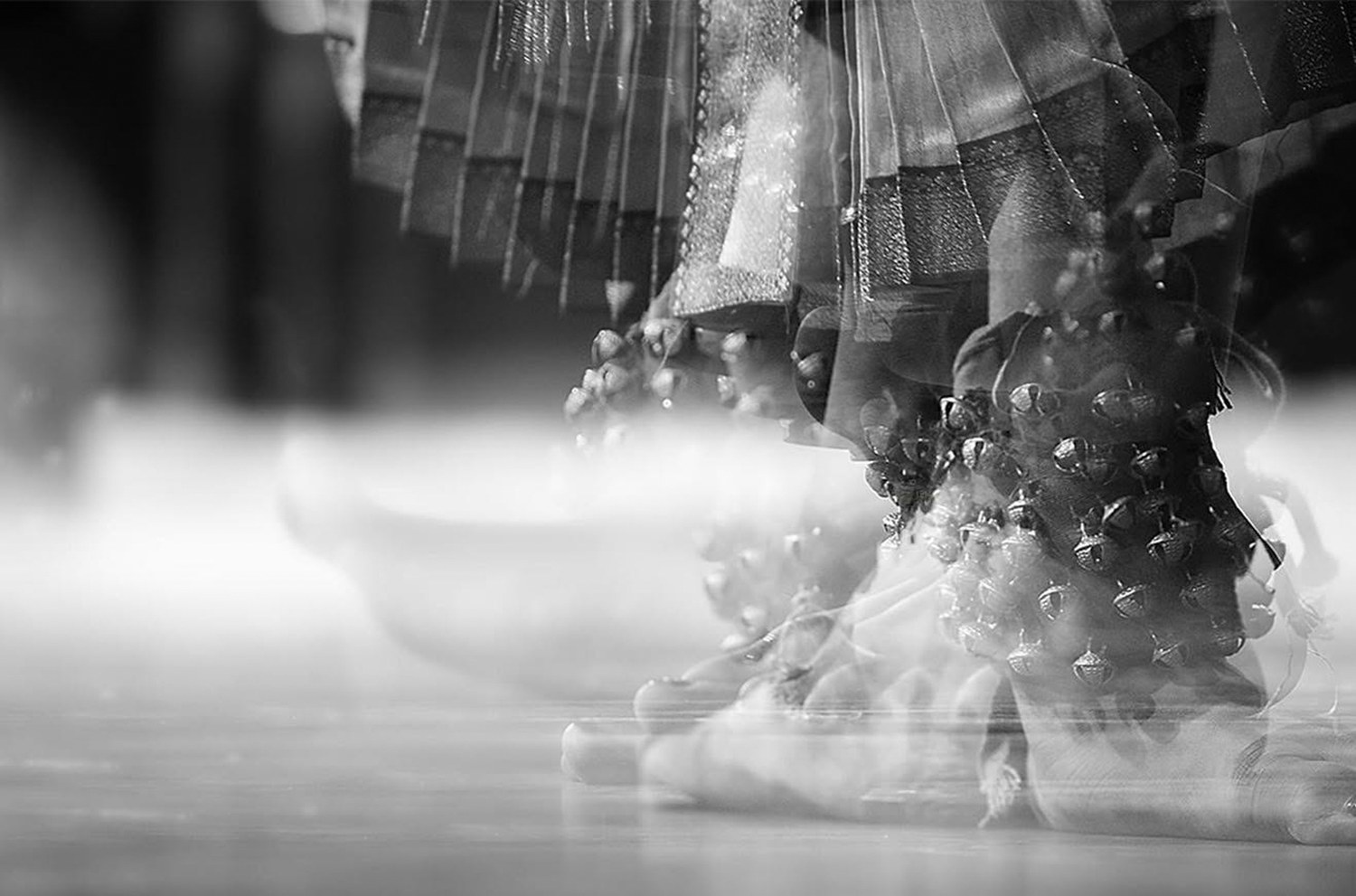
▪ An 8.15 places you in Master territory — the technical execution and the creative decision are both resolved, and the image creates a specific emotional register that lingers after looking away.
▪ To reach 9.0+, two things would need to align: a clearer primary subject within the layered sequence — one foot position that dominates while the others ghost around it — and a tighter crop that removes the upper fabric layers and holds the frame entirely on the feet and bells where the rhythm is most concentrated. That frame would feel like being inside the beat of the tabla rather than watching the dance from the audience.
▪ The habit that gets there: shoot the layered sequence, then shoot one frame at a faster shutter speed that freezes a single position sharply — the combination of both gives you the choice in post to decide which position becomes the anchor and which positions ghost. **Alexey Titarenko** — his layered crowd sequences in St Petersburg use this same technique, where one figure is sharp and the rest blur into temporal flow. Search: Alexey Titarenko City of Shadows. Your trend: 16 images evaluated in People — this is your highest score in this genre, and the creative technique override is what earned it.
SL Evaluation · Expert-calibrated
An 8.15 places you in Master territory — the technical execution and the creative decision are both resolved, and the image creates a specific emotional register that lingers after looking away.
To reach 9.0+, two things would need to align: a clearer primary subject within the layered sequence — one foot position that dominates while the others ghost around it — and a tighter crop that removes the upper fabric layers and holds the frame entirely on the feet and bells where the rhythm is most concentrated. That frame would feel like being inside the beat of the tabla rather than watching the dance from the audience.
The habit that gets there: shoot the layered sequence, then shoot one frame at a faster shutter speed that freezes a single position sharply — the combination of both gives you the choice in post to decide which position becomes the anchor and which positions ghost. Alexey Titarenko — his layered crowd sequences in St Petersburg use this same technique, where one figure is sharp and the rest blur into temporal flow. Search: Alexey Titarenko City of Shadows. Your trend: 16 images evaluated in People — this is your highest score in this genre, and the creative technique override is what earned it.
Next time you are photographing any repetitive human motion — a potter's wheel, a weaver's shuttle, a street vendor's hand gesture, a child on a swing — try a one-second exposure that layers the motion into a visible rhythm. Use a tripod or brace the camera against a solid surface. The technique works anywhere motion repeats.
YOUR NEXT BODY OF WORK SEQUENCE: The story is the invisible made visible — the gestures, rhythms, and movements that happen too fast or too slow for the eye to hold. Frame 1: a classical dancer's hand mudra transitioning between two positions, layered as ghosting that shows the symbolic shift. Frame 2: a street food vendor's hand pouring chai in a long arc, the liquid frozen mid-pour with motion blur on the hand that creates the sense of practiced repetition. Frame 3: a child's face during a festival — one sharp exposure layered with a second exposure half a second later, the smile appearing and the eyes closing, so the viewer sees the transition from joy to overwhelm in a single frame.
The photograph you almost made is always better than the one you settled for. But the one you made here — the rhythm held visible — is the one most photographers would not have attempted.
You chose to show the rhythm rather than freeze a single instant — that decision is what most dance photographers do not make, because it requires trusting the technique over the conventional sharp-subject expectation.
Harold Edgerton — his stroboscopic motion studies of athletes and dancers in the 1930s used the same principle: make the temporal dimension visible by layering multiple positions in a single frame. Harold Edgerton golfer multiple exposure. Your image is in that tradition — the technique as the revelation.
This image has a story because it shows what classical Indian dance feels like from inside the movement — the bells, the rhythm, the suspension between beats — rather than what it looks like from the audience. That shift from observation to immersion is the story.
What stood out
Beautifully resolved — you made the rhythm visible. The layered ghosting of the feet and ghungroo bells transforms a single dance moment into a visual arc, and that decision to show the temporal flow rather than freeze a single instant is what separates this from conventional dance photography. The suspension you created — the viewer held inside the rhythm rather than outside it — is the frame's achievement.
▪ Next time you are photographing any repetitive human motion — a potter's wheel, a weaver's shuttle, a street vendor's hand gesture, a child on a swing — try a one-second exposure that layers the motion into a visible rhythm. Use a tripod or brace the camera against a solid surface. The technique works anywhere motion repeats.
▪ YOUR NEXT BODY OF WORK SEQUENCE: The story is the invisible made visible — the gestures, rhythms, and movements that happen too fast or too slow for the eye to hold. Frame 1: a classical dancer's hand mudra transitioning between two positions, layered as ghosting that shows the symbolic shift. Frame 2: a street food vendor's hand pouring chai in a long arc, the liquid frozen mid-pour with motion blur on the hand that creates the sense of practiced repetition. Frame 3: a child's face during a festival — one sharp exposure layered with a second exposure half a second later, the smile appearing and the eyes closing, so the viewer sees the transition from joy to overwhelm in a single frame.
▪ The photograph you almost made is always better than the one you settled for. But the one you made here — the rhythm held visible — is the one most photographers would not have attempted.
Beautifully resolved — you made the rhythm visible. The layered ghosting of the feet and ghungroo bells transforms a single dance moment into a visual arc, and that decision to show the temporal flow rather than freeze a single instant is what separates this from conventional dance photography. The suspension you created — the viewer held inside the rhythm rather than outside it — is the frame's achievement.
Your next shot — bookmarked
Chowdiah Memorial Hall
Chowdiah Memorial Hall is close by — classical dance performances and rehearsals happen regularly, and the stage lighting during evening practice sessions creates strong directional light that works beautifully for layered motion technique. Arrive during rehearsal hours when the dancers are working through sequences repeatedly — the repetition gives you multiple attempts at the same gesture. The frame worth making: a Bharatanatyam aramandi position layered with the transition to a standing pose, shot from low angle so the feet and the floor pattern are both visible.
Edit suggestions
Balanced · Light editing
Crop tighter to remove the upper fabric layers — hold the frame entirely on the feet, ankles, and ghungroo bells. The rhythm is strongest there, and the fabric above is visually competing for attention without adding to the story.
Darken the background floor slightly — the bright patch in the lower left is pulling the eye away from the layered foot positions. A darker floor creates stronger separation and lets the bells and fabric read more clearly.
Increase contrast slightly on the ghungroo bells — they are the sonic element of the dance made visible, and a bit more tonal separation would make them the visual anchor within the layered motion.
Artistic · Heavy editing
Layer this frame with a second exposure of the dancer's face in profile — eyes closed, expression meditative — positioned in the upper third where the fabric currently is. The combination would show the internal stillness and the external rhythm simultaneously, which is the emotional truth of classical dance. The feeling would shift from energy to transcendence.
How this photographer is developingLast 19 photographs
League standing is determined by calibrated evaluation against the Shutter League standard. Standings reflect evaluated photographs only.
Terms & Conditions ·
Privacy Policy ·
Refund Policy