Higher than 95% of images in the League. Grandmaster — Fewer than 1 in 100 reach 9.
99.1510
✓ Apex DDI across 5 dimensions
✓ Expert review by Grandmaster mentor
✓ Final evaluation calibrated
Evaluated 10 Aug 2026 · Public
The five dimensions
Emotion
9.3↑
Your Strongest
Wonder Factor
9.2
Strong
Visual Impact
8.9
Strong
Difficulty
8.7
Strong
Timing
8.4↓
Your Next Leap
Tap a dimension to see the engine's reasoning · All evaluations out of 10
SL evaluation distribution
059.1510
What Shutter League saw
▪ Grandmaster (9.15) places you in the top 1% of Creative images evaluated on Shutter League — this is the level where the image defines its own visual language and the viewer cannot forget it.
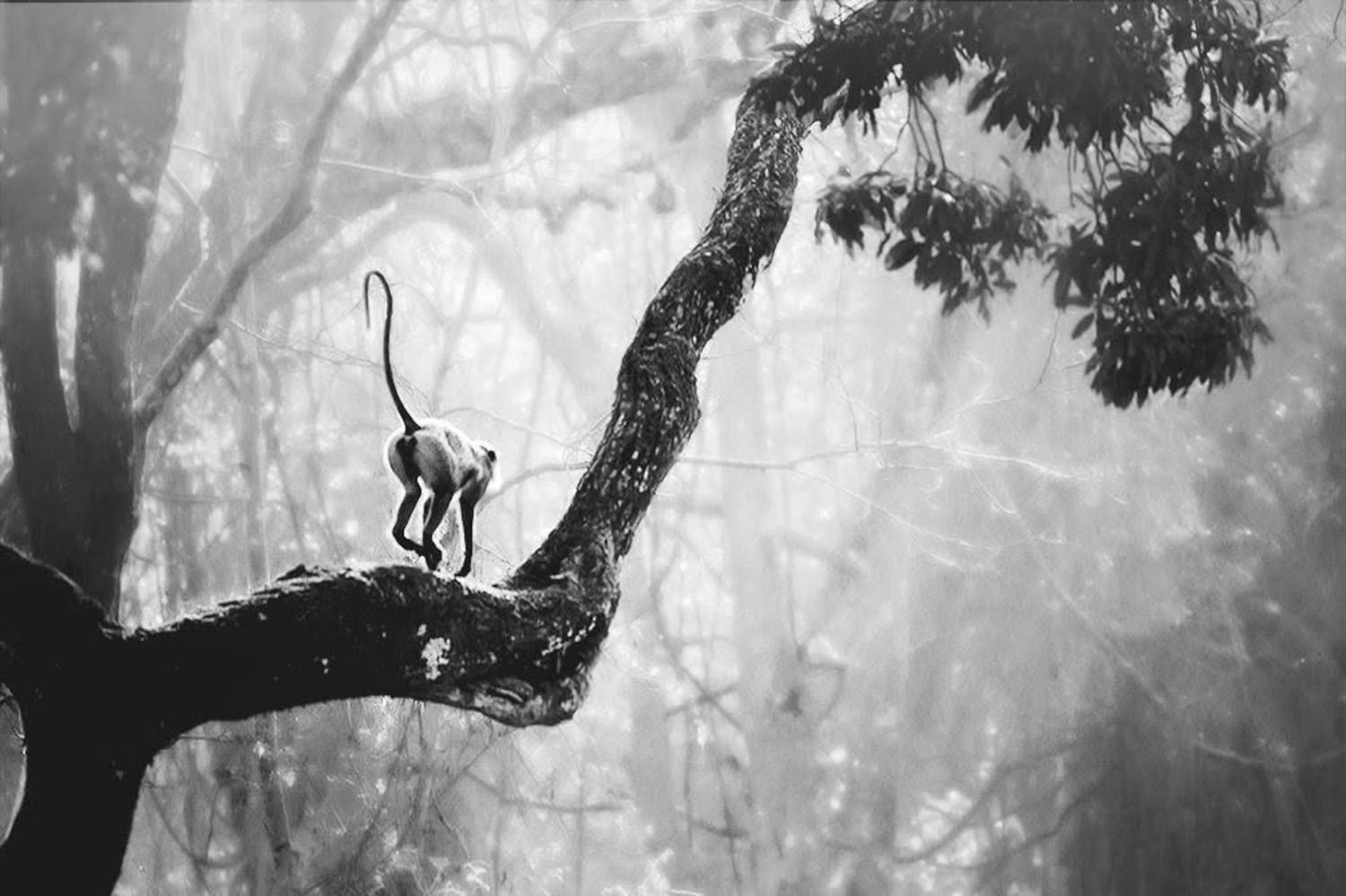
▪ To reach Legend (9.7+), two things would need to align: the langur would need to be in a gesture or posture that adds one more layer of meaning — head turned back toward camera, tail forming a perfect question mark, body language that names a specific emotion rather than neutral transit — and the mist would need to be at the exact density where one more tree layer emerges as a ghost form in the deep background, adding one more plane of atmospheric depth. That frame would be the image that wins Sony World Photography Awards in the Creative category — the singular find that could only exist once.
▪ **Michael Kenna** — his minimalist tree studies in Hokkaido use this exact tonal discipline and geometric reduction, and your langur frame is working in that same tradition. The habit that gets there: shoot the same subject at three different mist densities and compare them later — you will learn exactly which atmospheric window creates maximum depth without going flat.
SL Evaluation · Expert-calibrated
Grandmaster (9.15) places you in the top 1% of Creative images evaluated on Shutter League — this is the level where the image defines its own visual language and the viewer cannot forget it.
To reach Legend (9.7+), two things would need to align: the langur would need to be in a gesture or posture that adds one more layer of meaning — head turned back toward camera, tail forming a perfect question mark, body language that names a specific emotion rather than neutral transit — and the mist would need to be at the exact density where one more tree layer emerges as a ghost form in the deep background, adding one more plane of atmospheric depth. That frame would be the image that wins Sony World Photography Awards in the Creative category — the singular find that could only exist once.
Michael Kenna — his minimalist tree studies in Hokkaido use this exact tonal discipline and geometric reduction, and your langur frame is working in that same tradition. The habit that gets there: shoot the same subject at three different mist densities and compare them later — you will learn exactly which atmospheric window creates maximum depth without going flat.
Next time you are at any location where mist or fog creates atmospheric separation at dawn — Lalbagh during winter mornings, Hesaraghatta Lake when the water is cold and the air is warm, Nandi Hills on overcast days — apply this same reduction principle to whatever subject appears: a lone tree, a fisherman, a wading bird. The technique is portable.
YOUR NEXT BODY OF WORK SEQUENCE: The story is 'Bengaluru at the edge of visibility — the city's wild subjects in the moments when atmosphere transforms them'. Frame 1: A Rose-ringed Parakeet on a wire against heavy fog — the bird as a single point of colour in a white void. Frame 2: A street dog silhouetted at dawn under a single streetlight with mist halos — the urban animal as geometric anchor. Frame 3: A Brahminy Kite in flight through layered mist — wings mid-beat, the bird suspended between visible and invisible, the frame that stays with you because it feels like the subject is dissolving into air.
The photograph you almost made is always better than the one you settled for — but this time, you did not settle, and the frame proves it.
Patiently executed — you recognised that the minimalist frame requires three variables to align (subject geometry, atmospheric density, tonal precision) and you waited for all three instead of settling for two.
This image has a story because it transforms the familiar into the unrepeatable — the Hanuman Langur is the most common primate in urban India, and this frame makes it feel like a once-in-a-lifetime sighting through sheer compositional discipline.
What stood out
Exceptionally patient — you waited for the mist density, the langur pause, and the exact geometric resolution to align simultaneously, and the frame earned every bit of that patience. This is the minimalist reduction at Grandmaster level — a living subject stripped to pure form, tonal precision holding both extremes without clipping, and the emotional register so specific it stops the viewer mid-scroll. The langur is everywhere in Bengaluru. This image is not.
▪ Next time you are at any location where mist or fog creates atmospheric separation at dawn — Lalbagh during winter mornings, Hesaraghatta Lake when the water is cold and the air is warm, Nandi Hills on overcast days — apply this same reduction principle to whatever subject appears: a lone tree, a fisherman, a wading bird. The technique is portable.
▪ YOUR NEXT BODY OF WORK SEQUENCE: The story is 'Bengaluru at the edge of visibility — the city's wild subjects in the moments when atmosphere transforms them'. Frame 1: A Rose-ringed Parakeet on a wire against heavy fog — the bird as a single point of colour in a white void. Frame 2: A street dog silhouetted at dawn under a single streetlight with mist halos — the urban animal as geometric anchor. Frame 3: A Brahminy Kite in flight through layered mist — wings mid-beat, the bird suspended between visible and invisible, the frame that stays with you because it feels like the subject is dissolving into air.
▪ The photograph you almost made is always better than the one you settled for — but this time, you did not settle, and the frame proves it.
Exceptionally patient — you waited for the mist density, the langur pause, and the exact geometric resolution to align simultaneously, and the frame earned every bit of that patience. This is the minimalist reduction at Grandmaster level — a living subject stripped to pure form, tonal precision holding both extremes without clipping, and the emotional register so specific it stops the viewer mid-scroll. The langur is everywhere in Bengaluru. This image is not.
Your next shot — bookmarked
Bannerghatta Biological Park
Bannerghatta Biological Park is nearby — the Bear Rescue Centre has open enclosures where Sloth Bears move through natural forest habitat, and on winter mornings the mist rolls through the canopy exactly like this. Dawn entry, 06:30-07:30 window. The frame worth making: a bear silhouette on a fallen log against layered mist, the same tonal precision and geometric reduction you applied here.
Edit suggestions
Balanced · Light editing
Darken the upper right corner by half a stop — the bright patch is pulling the eye away from the langur and competing for attention. Remove that competition and the subject becomes the undisputed anchor.
Add a subtle vignette to the frame edges — not heavy, just enough to guide the eye inward toward the branch curve and hold it there. Minimalist work earns its focus through reduction, and the vignette completes that reduction.
Check the black point on the branch — if there is any detail left in the deepest shadow that is not contributing to the form, let it go to pure black. The branch should be a silhouette, not a textured surface.
Artistic · Heavy editing
Convert to a high-key treatment — push the background mist toward near-white, hold the langur and branch as the only dark elements, and the image becomes a study in absence rather than atmosphere. The emotional register shifts from stillness to void, and the frame becomes even more singular.
How this photographer is developingLast 19 photographs
League standing is determined by calibrated evaluation against the Shutter League standard. Standings reflect evaluated photographs only.
Terms & Conditions ·
Privacy Policy ·
Refund Policy