Higher than 68% of images in the League. Master — Exceptional. Fewer than 1 in 10 reach this.
88.1010
✓ Apex DDI across 5 dimensions
✓ Expert review by Grandmaster mentor
✓ Final evaluation calibrated
Evaluated 10 Aug 2026 · Public
The five dimensions
Emotion
8.6↑
Your Strongest
Wonder Factor
8.4
Strong
Visual Impact
8.2
Strong
Difficulty
7.8
Strong
Timing
7.5↓
Your Next Leap
Tap a dimension to see the engine's reasoning · All evaluations out of 10
SL evaluation distribution
058.1010
What Shutter League saw
▪ Master tier — you are working at the level where technique is no longer the challenge, the challenge is finding the conditions where the technique reveals something singular.
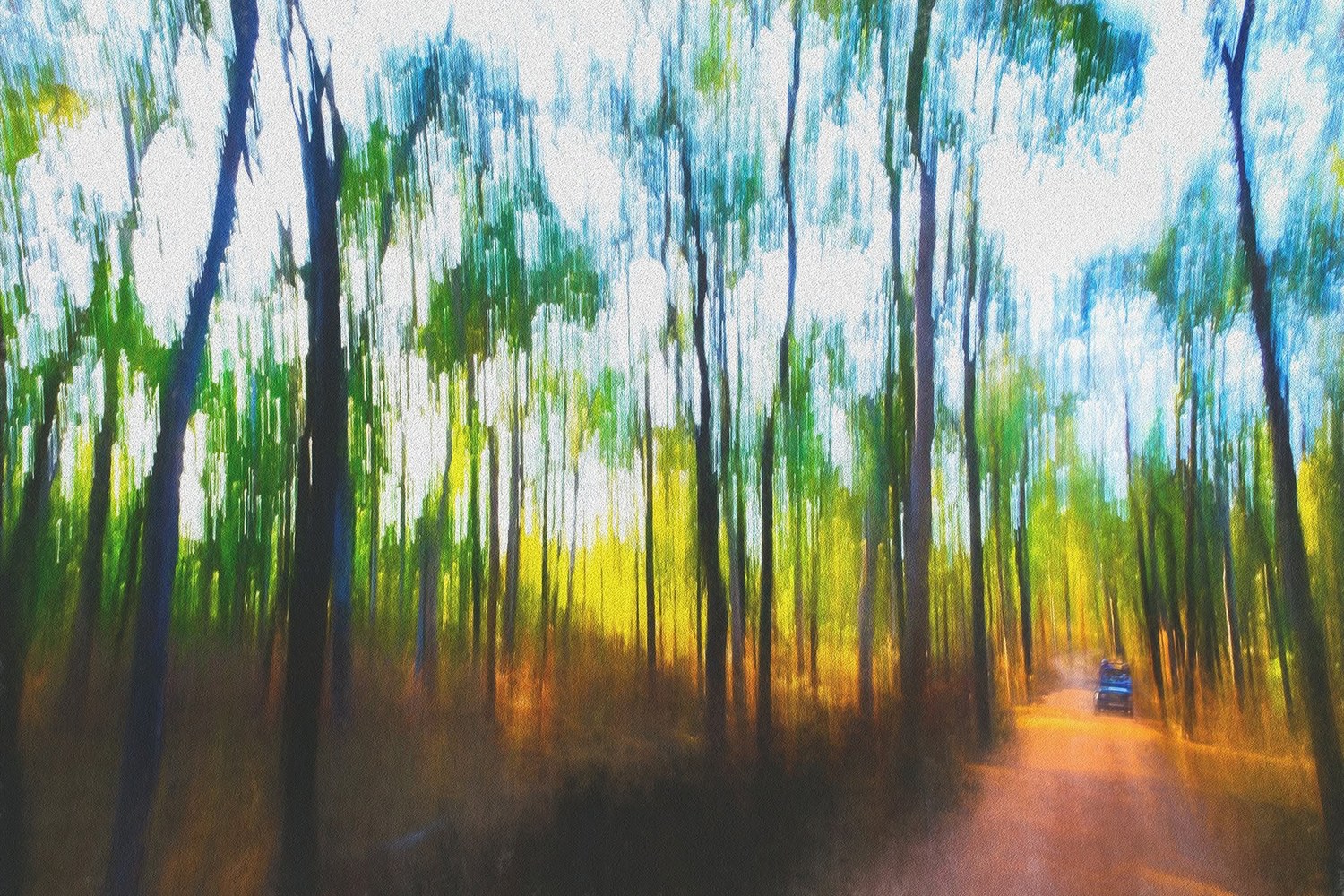
▪ The 9+ version of this frame: the vehicle is larger and sharper in the right third, the colour gradient is even more pronounced (shot 20 minutes earlier when the ground light was warmer), and the vertical streaks are perfectly parallel with no horizontal drift — that frame is the one that stops a judge mid-scroll.
▪ **Ernst Haas** built his career on this exact technique — ICM that transforms the subject into pure colour and line. Search: Ernst Haas New York motion blur. Your trend: three Creative ICM images in a row, each one cleaner than the last — you are refining the execution and that refinement is visible in the scores.
SL Evaluation · Expert-calibrated
Master tier — you are working at the level where technique is no longer the challenge, the challenge is finding the conditions where the technique reveals something singular.
The 9+ version of this frame: the vehicle is larger and sharper in the right third, the colour gradient is even more pronounced (shot 20 minutes earlier when the ground light was warmer), and the vertical streaks are perfectly parallel with no horizontal drift — that frame is the one that stops a judge mid-scroll.
Ernst Haas built his career on this exact technique — ICM that transforms the subject into pure colour and line. Search: Ernst Haas New York motion blur. Your trend: three Creative ICM images in a row, each one cleaner than the last — you are refining the execution and that refinement is visible in the scores.
Next time you are in any forest or tree-lined road near Bengaluru — Bannerghatta, Turahalli, or the eucalyptus groves near Nandi Hills — try this same vertical ICM technique but add a horizontal pan at the end of the exposure. The trees streak vertically, then curve at the top as you pan — it creates a rhythm that is closer to calligraphy than photography.
YOUR NEXT BODY OF WORK SEQUENCE: The story is the forest as colour field, not landscape. Frame 1: vertical ICM like this one, warm-to-cool gradient, vehicle for scale. Frame 2: horizontal ICM of the same forest — the trees become horizontal bands of colour, no recognisable subject. Frame 3: a sharp, still frame of a single tree trunk against the same colour palette — the viewer sees what you abstracted, and the abstraction makes more sense.
The camera is just the tool. The real instrument is your attention — and you are learning to pay attention to what most photographers walk past.
Confidently executed — you held the camera movement vertical and consistent across the entire exposure, which is harder than it looks when you are standing on uneven ground or moving yourself.
Alexey Titarenko — his ICM work in St Petersburg transforms crowds and architecture into ghostly vertical streaks using the same technique you applied here. Alexey Titarenko City of Shadows. The principle is identical — motion blur as the primary subject, not an accident.
This image has a story — the forest as a colour field, the vehicle as the human scale reference, the technique as the lens that reveals what the eye cannot hold. That story is complete.
What stood out
Beautifully executed ICM — the vertical streaks hold the colour separation cleanly, the gradient from warm earth to cool canopy is complete, and the technique transforms the forest into something closer to a painting than a photograph. This is what skilled intentional camera movement looks like when the shutter speed, the light, and the colour palette all align.
▪ Next time you are in any forest or tree-lined road near Bengaluru — Bannerghatta, Turahalli, or the eucalyptus groves near Nandi Hills — try this same vertical ICM technique but add a horizontal pan at the end of the exposure. The trees streak vertically, then curve at the top as you pan — it creates a rhythm that is closer to calligraphy than photography.
▪ YOUR NEXT BODY OF WORK SEQUENCE: The story is the forest as colour field, not landscape. Frame 1: vertical ICM like this one, warm-to-cool gradient, vehicle for scale. Frame 2: horizontal ICM of the same forest — the trees become horizontal bands of colour, no recognisable subject. Frame 3: a sharp, still frame of a single tree trunk against the same colour palette — the viewer sees what you abstracted, and the abstraction makes more sense.
▪ The camera is just the tool. The real instrument is your attention — and you are learning to pay attention to what most photographers walk past.
Beautifully executed ICM — the vertical streaks hold the colour separation cleanly, the gradient from warm earth to cool canopy is complete, and the technique transforms the forest into something closer to a painting than a photograph. This is what skilled intentional camera movement looks like when the shutter speed, the light, and the colour palette all align.
Your next shot — bookmarked
Turahalli Forest
Turahalli Forest is nearby — the scrub forest has open canopy and the light filters through in patches, creating strong colour contrast between the warm ground and the cool shadows. Early morning, 06:30 to 07:30. Try vertical ICM on the dirt trails when a cyclist or walker is moving through — the human figure becomes a sharp anchor against the streaked trees.
Edit suggestions
Balanced · Light editing
Darken the upper third by half a stop — the bright sky is competing with the canopy colour and pulling the eye upward when the gradient should lead downward.
Removing that brightness lets the warm-to-cool gradient do the work.
Increase saturation selectively on the ochre ground tones — the warmth at the base is what anchors the gradient and right now it is slightly muted.
Pushing it one step makes the temperature contrast undeniable.
Crop tighter on the left edge — the leftmost tree streak is incomplete and creates an unresolved edge.
Removing it cleans the frame and lets the vertical rhythm settle.
Artistic · Heavy editing
develop a distinctive colour treatment and push the contrast hard — the vertical streaks become pure line, the gradient becomes tonal rather than chromatic, and the image shifts from painterly to graphic.
It becomes closer to a charcoal drawing than a photograph.
How this photographer is developingLast 19 photographs
League standing is determined by calibrated evaluation against the Shutter League standard. Standings reflect evaluated photographs only.
Terms & Conditions ·
Privacy Policy ·
Refund Policy