Higher than 89% of images in the League. Grandmaster — Fewer than 1 in 100 reach 9.
99.1010
✓ Apex DDI across 5 dimensions
✓ Expert review by Grandmaster mentor
✓ Final evaluation calibrated
Evaluated 06 Aug 2026 · Public
The five dimensions
Emotion
9.3↑
Your Strongest
Wonder Factor
9.2
Strong
Visual Impact
8.9
Strong
Difficulty
8.7
Strong
Timing
8.4↓
Your Next Leap
Tap a dimension to see the engine's reasoning · All evaluations out of 10
SL evaluation distribution
059.1010
What Shutter League saw
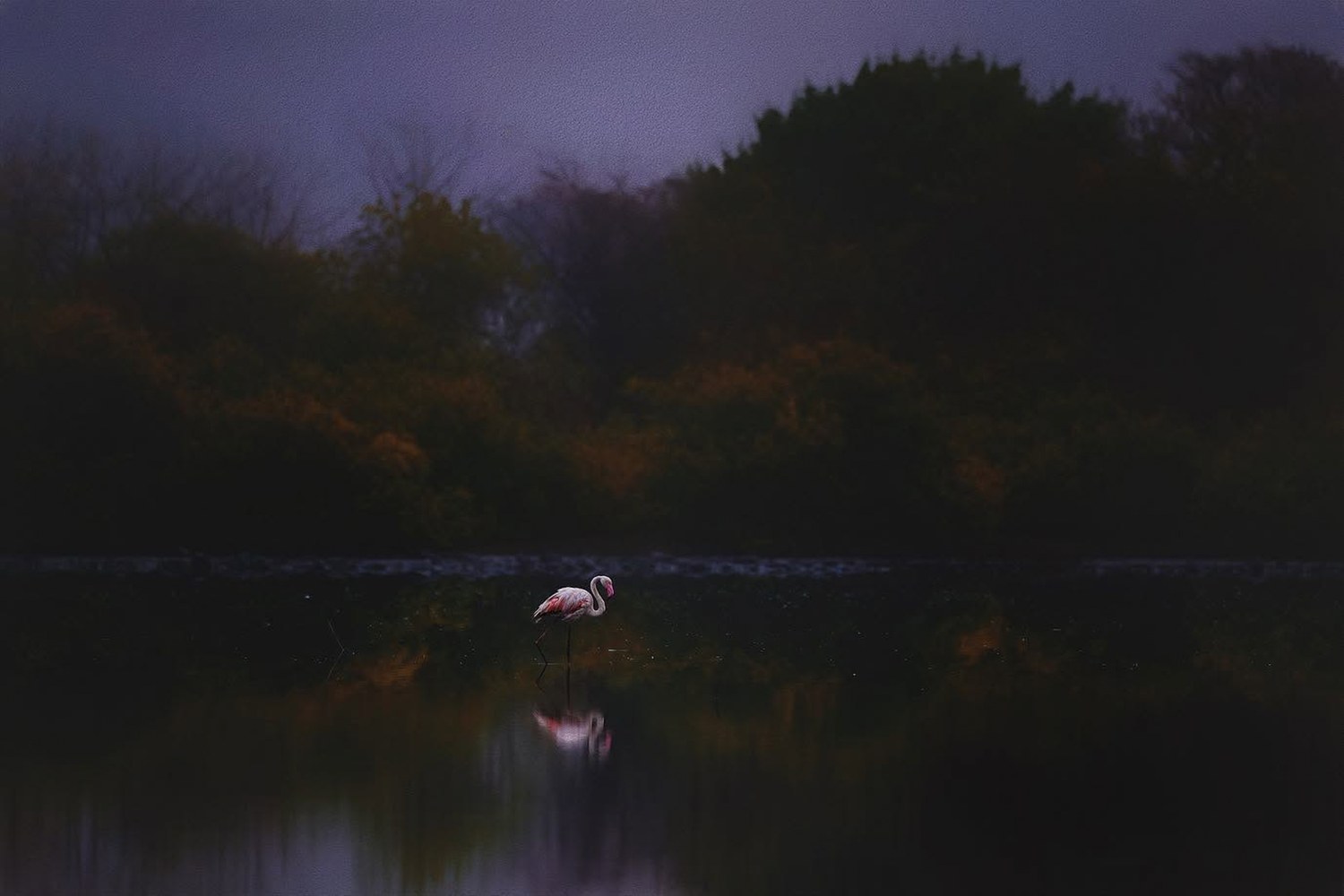
▪ A Grandmaster evaluation at 9.1 places this image in the top 2% of Creative work evaluated on Shutter League — this is award-level minimalist photography where the reduction to form and void is complete and undeniable.
▪ To reach 9.5+, two things would need to align: the flamingo would need to be at the absolute peak of its neck curve — the instant before or after the geometry resolves — and the reflection would need to be perfectly symmetrical with no ripple distortion. That frame would be the one that defines minimalist wildlife photography for the year.
▪ The habit that gets there: arrive earlier. The light window you captured here exists for maybe 10 minutes at dawn. Arriving 20 minutes earlier gives you the full arc of that window and the chance to catch the exact instant when every variable peaks simultaneously. **Michael Kenna** built his entire practice on this patience — the willingness to wait for the light that most photographers miss because they arrive after it has already passed.
SL Evaluation · Expert-calibrated
A Grandmaster evaluation at 9.1 places this image in the top 2% of Creative work evaluated on Shutter League — this is award-level minimalist photography where the reduction to form and void is complete and undeniable.
To reach 9.5+, two things would need to align: the flamingo would need to be at the absolute peak of its neck curve — the instant before or after the geometry resolves — and the reflection would need to be perfectly symmetrical with no ripple distortion. That frame would be the one that defines minimalist wildlife photography for the year.
The habit that gets there: arrive earlier. The light window you captured here exists for maybe 10 minutes at dawn. Arriving 20 minutes earlier gives you the full arc of that window and the chance to catch the exact instant when every variable peaks simultaneously. Michael Kenna built his entire practice on this patience — the willingness to wait for the light that most photographers miss because they arrive after it has already passed.
Next time you are at any wetland at dawn — Hesaraghatta Lake, Manchanabele, Ulsoor Lake, or any water body near you — arrive 30 minutes before first light and watch for the exact moment when the sky is bright enough to read the subject but the water is still dark. That is the minimalist light window. Shoot at your longest focal length to compress the subject against the background and eliminate clutter.
YOUR NEXT BODY OF WORK SEQUENCE: The story is Solitude in the Urban Wild — wetland birds at dawn in Bengaluru's shrinking water bodies. Frame 1: A single painted stork at Hesaraghatta at first light, silhouetted against pale sky, the industrial skyline faint in the background. Frame 2: A cormorant on a submerged branch at Ulsoor Lake, the city's apartment towers reflected in the water behind it. Frame 3: The frame that stays with you — a lone egret standing in shallow water at Manchanabele, the water so still it becomes a mirror, and the bird exists twice — once in the world, once in the reflection.
The photograph you almost made is always better than the one you settled for. You did not settle here. You waited. That is the whole difference.
Patiently executed — you committed to the reduction decision and waited for the exact light window when the flamingo would be readable but the background would stay dark, and that patience is what separates this frame from the thousands of flamingo portraits made at the same wetland.
Saul Leiter worked this same way in his New York street work — reducing complex urban scenes to pure form, colour, and negative space. The subject becomes geometry. The void becomes the statement. Saul Leiter snow reflections.
This image has a story because it shows what minimalist reduction can do to a wildlife subject — the flamingo is everywhere, but this image is not. The decision to strip everything away and commit to simplicity is the story.
What stood out
Exceptionally patient — you waited for the exact light window when the flamingo would be readable against the dark water and the background would fall into near-black, and that decision is what makes this frame singular. The reduction to form, reflection, and void is complete. This is minimalist wildlife photography at Grandmaster level — the flamingo is no longer a bird portrait, it is geometric punctuation in a tonal field.
▪ Next time you are at any wetland at dawn — Hesaraghatta Lake, Manchanabele, Ulsoor Lake, or any water body near you — arrive 30 minutes before first light and watch for the exact moment when the sky is bright enough to read the subject but the water is still dark. That is the minimalist light window. Shoot at your longest focal length to compress the subject against the background and eliminate clutter.
▪ YOUR NEXT BODY OF WORK SEQUENCE: The story is Solitude in the Urban Wild — wetland birds at dawn in Bengaluru's shrinking water bodies. Frame 1: A single painted stork at Hesaraghatta at first light, silhouetted against pale sky, the industrial skyline faint in the background. Frame 2: A cormorant on a submerged branch at Ulsoor Lake, the city's apartment towers reflected in the water behind it. Frame 3: The frame that stays with you — a lone egret standing in shallow water at Manchanabele, the water so still it becomes a mirror, and the bird exists twice — once in the world, once in the reflection.
▪ The photograph you almost made is always better than the one you settled for. You did not settle here. You waited. That is the whole difference.
Exceptionally patient — you waited for the exact light window when the flamingo would be readable against the dark water and the background would fall into near-black, and that decision is what makes this frame singular. The reduction to form, reflection, and void is complete. This is minimalist wildlife photography at Grandmaster level — the flamingo is no longer a bird portrait, it is geometric punctuation in a tonal field.
Your next shot — bookmarked
Hesaraghatta Lake
Hesaraghatta Lake is 30 minutes from you. Painted storks and egrets are active at dawn right now in December — arrive by 06:00, position yourself on the western shore so the rising sun is behind you, and look for single birds in shallow water with clean backgrounds. The frame worth making: one bird, dark water, pale sky, nothing else.
Edit suggestions
Balanced · Light editing
Darken the small bright patch in the upper right treeline — it is the only element competing faintly with the flamingo for attention. Remove that competition and the subject becomes the absolute focus.
Reduce the ripple distortion in the reflection by 10-15% — the reflection is strong but perfect symmetry would make the geometric statement undeniable.
Lift the pink tones in the flamingo by half a stop without clipping the highlights — the plumage is readable but pushing it slightly brighter creates more separation from the dark water.
Artistic · Heavy editing
Convert to pure black and white and push the contrast until the flamingo becomes a white silhouette against pure black — the reduction becomes absolute and the image transforms into pure graphic form. The flamingo is no longer a bird. It is a mark on a void.
How this photographer is developingLast 19 photographs
League standing is determined by calibrated evaluation against the Shutter League standard. Standings reflect evaluated photographs only.
Terms & Conditions ·
Privacy Policy ·
Refund Policy